Some incredible brands in the United States are more recognizable than the products they serve — like Band-Aids instead of bandages, Coca-Cola instead of soda pop, and Google instead of a search query.
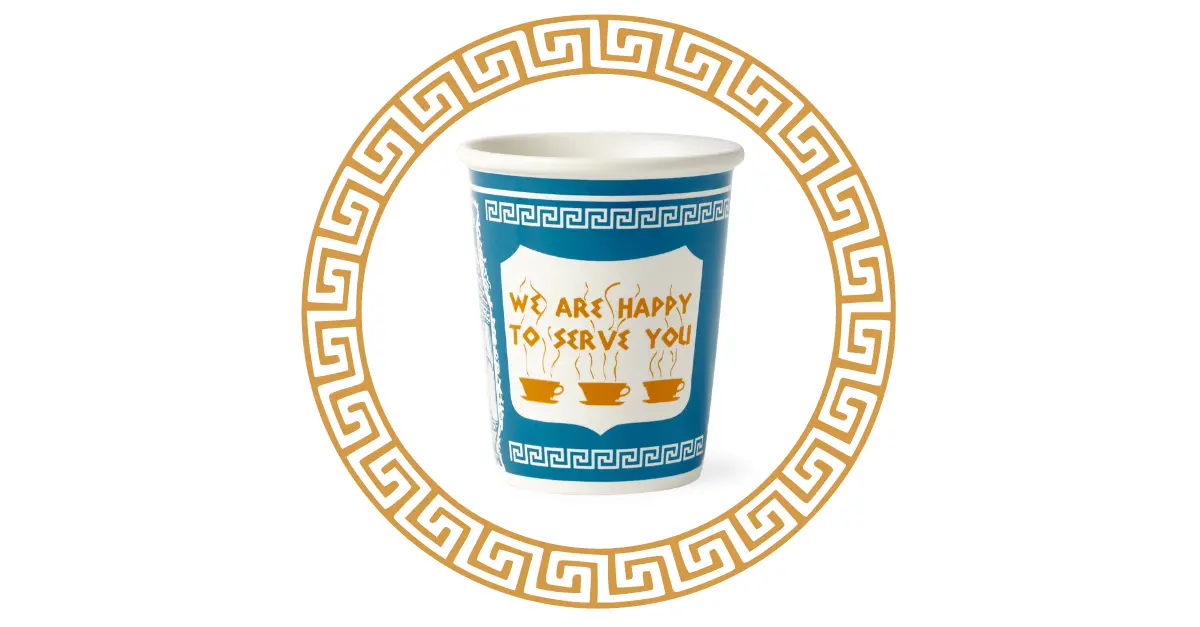
The iconic Anthora coffee cup became New York City's most recognizable to-go cup from the 1960s through the 1990s. Designed by Holocaust survivor Leslie Buck in 1963 for NYC's Greek community, this blue, white, and gold cup served over 500 million coffee drinkers and appeared in countless films before declining with Starbucks' rise, only to be revived in 2015 due to popular demand.
The Birth of the Anthora
The Anthora wasn't created by a Greek designer, but it was made specifically for New York's thriving Greek community.
During the 1900s, two large migrations brought 421,000 Greeks to the East Coast. New York became the largest Greek settlement outside of Greece or Cyprus, and these immigrants brought their coffee culture with them.
Greek-owned cafes and pushcarts became fixtures across the city. In 1963, the Sherri Cup Company saw an opportunity to create a to-go cup that would appeal to these vendors and customers alike.
Unveiling the Iconic Design
Leslie Buck, a Czechoslovakian Holocaust survivor working in Sherri Cup's marketing department, took on the challenge of selling cups to Greek vendors.
When his initial attempts failed, he redesigned the cup itself. Without formal design training, he researched Greek culture and incorporated:
- Colors from the Greek flag (blue, white, and gold)
- Classical Amphora urn shapes
- The Greek key pattern as decorative filigree
- The welcoming message: "We Are Happy To Serve You"
The cup's name came from Buck's thick Eastern European accent pronouncing "Amphora" — it sounded like "Anthora." Beyond its visual appeal, the design solved a practical problem: a to-go cup that wouldn't burn your hands during your morning commute.
By 1994, the Sherri Cup Company had sold 500 million Anthora cups.
The Anthora's Peak and Decline
Some New Yorkers called the cup as recognizable as the Statue of Liberty.
The design transcended its Greek roots and appeared at every bagel stand, diner, and deli across the city. Hollywood captured the cup in films like Goodfellas, Men in Black, and Law & Order. Hillary Clinton even ordered 10,000 cups for a gala dinner when she was tapped as Secretary of State.
But the rise of Starbucks in the 2000s destabilized the market. Solo Company acquired Sherri and the Anthora rights in 2005, then ceased large-scale distribution in 2006.
A 2007 New York Times article called the cup "one of those endangered artifacts." The era of the Anthora seemed to be over.
A Revival and Collectability
In 2015, Dart Container Company revived the Anthora due to overwhelming demand.
During its absence, competitors had tried to fill the void with similar designs — changing the urn to harpists or discus-throwers, or using knock-off fonts. One collector interviewed by the New York Times described these variations as "an art form that is tattooed to the body of New York."
The authentic design is now back in production. NYCoffeeCup.com sells the original New York Coffee Cup design, keeping the legacy alive for new generations.
Frequently Asked Questions
▶ Who designed the Anthora coffee cup?
▶ Why is it called the Anthora?
▶ Can you still buy Anthora coffee cups?
▶ How many Anthora cups were sold at their peak?
▶ Why did the Anthora cup decline?
A Cup That Tells New York's Story
The Anthora represents more than just a coffee cup — it's a testament to immigrant ingenuity and New York's melting pot spirit.
Created by a Holocaust survivor to honor Greek immigrants, it became a symbol embraced by all New Yorkers. The message "We Are Happy To Serve You" captured the entrepreneurial spirit of a city built by people from around the world.
From its meteoric rise to near extinction and ultimate revival, the Anthora's story mirrors the resilience of New York itself.